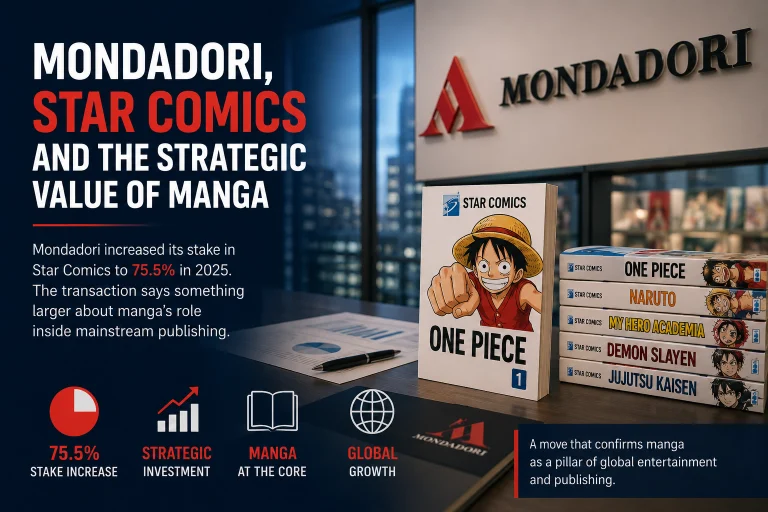

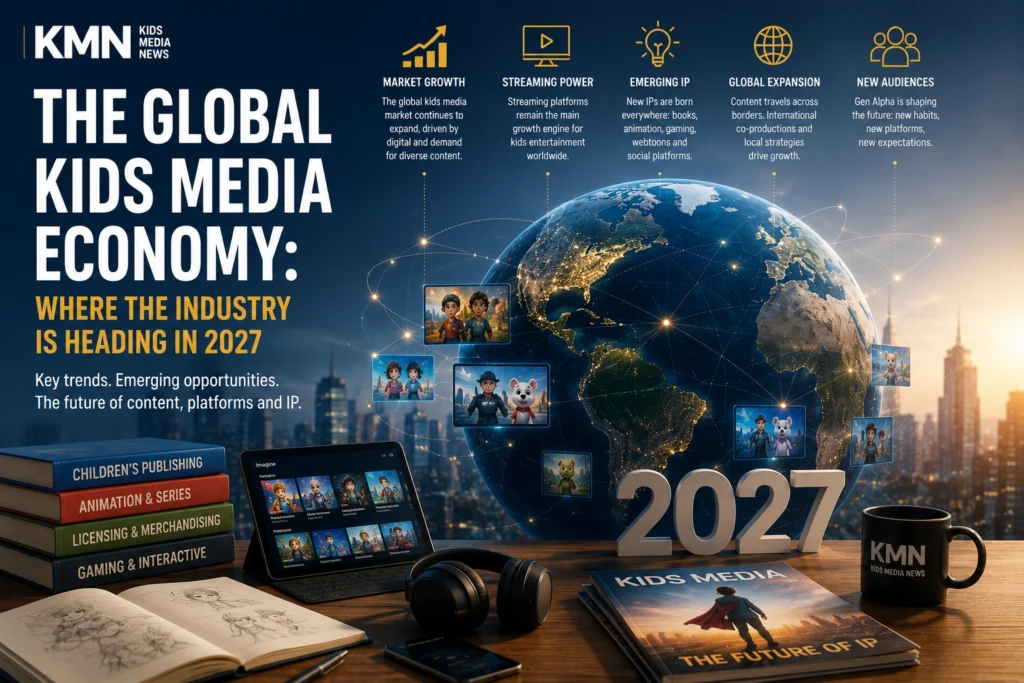
The children’s entertainment business is undergoing a structural transformation as publishing, animation, gaming, streaming and licensing converge around intellectual property.
Slug: global-kids-media-economy-2027
Tags: Kids Media, Children’s Entertainment, Intellectual Property, Licensing, Publishing, Animation, Streaming, Gaming, Global Market, 2027 Trends
From content chains to IP ecosystems
The children’s entertainment business is entering a new phase. Publishing, animation, streaming, gaming and licensing are still distinct industries, but the most valuable properties increasingly move through all of them. The strategic asset at the centre is intellectual property: a character, world or story that can create attachment across formats and territories.
The children’s entertainment business is entering a new phase. Publishing, animation, streaming, gaming and licensing are still distinct industries, but the most valuable properties increasingly move through all of them. The strategic asset at the centre is intellectual property: a character, world or story that can create attachment across formats and territories. The old model was relatively linear: a book was published, a programme was broadcast, a toy was licensed and each business measured its own success. The emerging model is circular. A book can create a screen opportunity; a screen adaptation can reactivate publishing; a game can introduce a new audience; licensing can keep the property visible between releases; experiences can turn fandom into a physical relationship.
Idea → IP → Community → Multiple Platforms → Licensing → Experiences → Global Franchise
The market is already signalling convergence
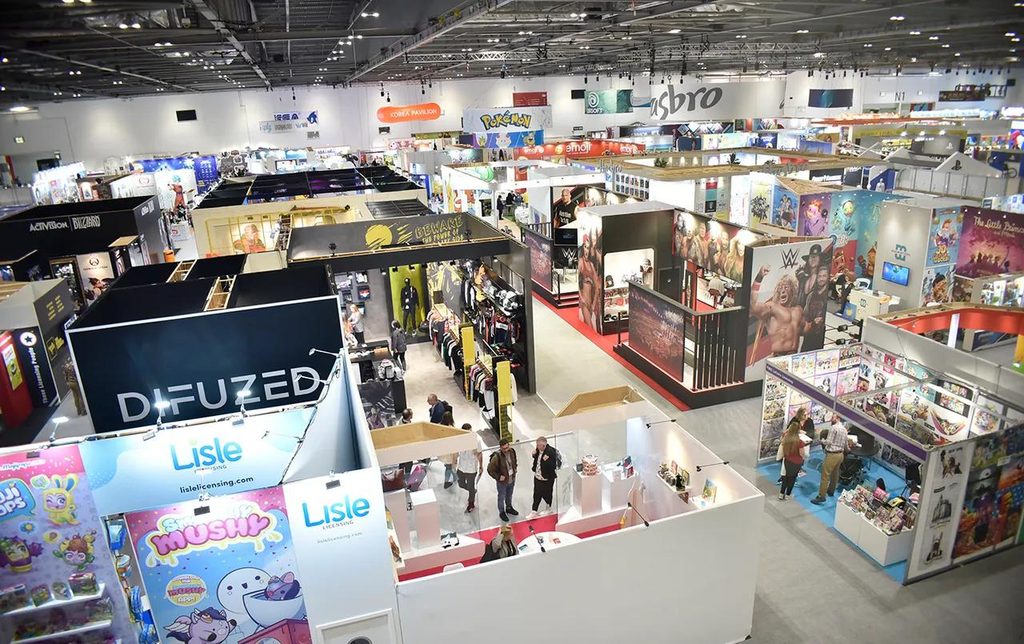
Licensing International reported $389.8 billion in global retail sales of licensed merchandise and services in 2025, up 5.45% year on year. Character and Entertainment remained the largest property type at $161.8 billion. These figures do not represent the whole kids media economy, but they show how valuable audience attachment becomes once a property moves beyond its original format.
At the same time, the Bologna Children’s Book Fair has continued to build infrastructure connecting publishing with television, film, games and licensing. Its TV/Film Rights Centre facilitated more than 600 matchmaking meetings in 2025, after more than 400 in its debut year. That is more than a trade-fair detail: it reflects an industry in which publishers increasingly meet producers before a property has finished travelling through its first medium.
Attention is the scarce resource
The abundance of content has changed the economics of children’s media. Production capacity is no longer the only barrier. The harder problem is being discovered and remembered. Nielsen’s first-half 2026 U.S. streaming data illustrates the durability of trusted kids properties: Bluey generated 22.8 billion minutes of viewing, SpongeBob SquarePants 16.9 billion and PAW Patrol 13.6 billion. SpongeBob also ranked strongly with adults 18–34, demonstrating how kids IP can become cross-generational.
The strategic question for 2027 is therefore not simply how much content companies can produce. It is how efficiently they can create, identify and scale properties that audiences want to revisit.
Asia is reshaping the map
Japan’s anime economy, Korea’s webtoon platforms and China’s scale in publishing and licensing have made the global flow of IP increasingly multidirectional. Western companies are no longer simply exporting children’s content to Asia. They are acquiring, adapting, licensing and learning from Asian formats, production models and fandom systems.
The next competitive advantage
KMN sees five forces defining the next phase: stronger ownership of underlying IP; earlier international thinking; direct audience data; transmedia development; and sustainable use of AI and technology. Companies that can connect creative judgement with rights strategy and audience intelligence will be better positioned than those organized around a single format.
KMN Outlook
The global kids media economy is becoming an IP economy. The winners will not necessarily be the companies producing the greatest number of books, episodes or apps. They will be the companies that build the strongest long-term relationship between stories and audiences — then give that relationship multiple ways to grow.
Sources
Licensing International — Global Licensing Survey
Bologna Children’s Book Fair — TV/Film Rights Centre
Nielsen — Streaming Landscape 2026
Informazioni sull'autore